Pages

▼
Drop Down MenusCSS Drop Down MenuPure CSS Dropdown Menu

Pimp your PFD - Personalize your Kayaking PFD

Your PFD is your personal flotation device, so you should make it just that; personal!

PFD life jacket safety accessories
What the Law Requires
All kayakers are required to have a PFD by law. There are a few other items the Coast Guard requires us to carry to be legal. These include:


  • a sound producing device
  • a signaling device
  • a visual distress signal
  • a navigational light


  • Meeting Those Requirements 
    The law doesn't provide definitions for these items and doesn't direct the paddler on where they should be stored. There is definitely room for creativity. Here are a few options to fulfill those Coast Guard requirements:


  • sound producing devices: whistles, air horns, conch shells
  • signaling device: SPOT GPS device, cell phone, VHF radio, lights, flags, paddles, mirrors, flares
  • visual distress signal: flags, paddles, mirrors, flares
  • navigational light: deck light, headlamp, flashlight

  • What I Carry, Where I Carry It and Why
     
    So where should you store all that stuff? In a dry bag in a hatch? In a deck bag? On your PFD? Here is where I keep it all... I have all of these things, either in my kayak or on my body. Here is what I carry:

    In my PFD

  • Rescue Howler Whistle
  • Floating Signaling Mirror
  • Petzl E+Lite Headlamp
  • NRS Co-Pilot Rescue Knife
  • lip balm
  • Sunscreen
  • Cliff Bar
  • On the Deck

  • Baja Deck Bag
  • VHF Radio
  • Deck Compass
  • Big sunscreen
  • iPhone in a Lifeproof case
  • Rehydration salts
  • Spare paddle
  • Bilge Pump
  • Paddle Float
  • In my Pelican Box

  • 1 glowstick per kayak
  • Air horn
  • Flares
  • Spare batteries
  • Emergency phone numbers
  • GPS
  • Map
  • Compass

  • In emergency situations, having these easily accessible can mean the difference between life and death. They should never be stored in a hatch, where they are very hard to get to. In a worst-case scenario, the paddler is a swimmer without a kayak. In this scenario, it is important that the paddler (now swimmer) has the essential equipment to survive. I don't keep my VHF radio on my PFD because I know that the conditions I paddle in are unlikely to separate me from my boat. If you are paddling alone or in rough water, you absolutely should have your VHF attached to you.

    You should equip your PFD with essentials based on where, when and what you will be paddling. Keeping a marine radio on your life jacket while paddling a quiet cypress swamp is overkill. Keeping it on your PFD while paddling in open ocean is definitely not. When in doubt, over-prepare. Many guides in colder environments keep emergency blankets in their PFDs. Some guides even tether a dry bag with fire making materials and extra clothes to themselves!


    life jacket safety accessories PFDAttaching things to your PFD
    This is where things get tricky.  It can be hard to get all of this stuff to fit, especially if your PFD has only a pocket or two, like mine. There are ways around this. One of them is the carabiner trick seen below. Don't be afraid to add knife attachment points or clips to your PFD, just make sure you mess with the flotation and make sure your modifications won't get you tangled or caught on anything. It is also very important not to overload your jacket with too much stuff. Your PFD is meant to keep you afloat. Do not sacrifice crucial buoyancy for unnecessary equipment.


    A carabiner on the shoulder strap can be a great way to hang  your whistle and lip balm. I know many male guides who do this. This trick works great for people with broad chests, but I found that the carabiner rubbed against my arm when I paddled.  I replaced the carabiner with a loop of 1/4" bungee cord.


    sea kayaking life jacket PFD signaling mirror
     I keep my mirror on a lanyard. If it's so bad that I'm using a mirror, it's bad enough for me to loose it if it isn't tied to me.
    I often keep a cliff bar or cliff shot in there too, for fast fuel. I have to take any snacks out every night so mice don't chew into my PFD. Raccoons will steal life jackets out of kayaks if we leave granola bars in them.


    PFD life jacket rescue knife co-pilot NRSMy knife is the NRS Co-Pilot Rescue Knife. I use it to cut birds and turtles free from nets, cut anyone who gets tangled in anything free, and to spread Nutella on my bagel at breakfast. Having a rescue knife with a blunt tip is crucial. Never attempt to free anyone with a pointed blade. It often ends in tragedy. Consider using bungee to connect your knife to your PFD to avoid dropping it during rescues.

    Trick it out for Comfort and Safety
    Be Seen
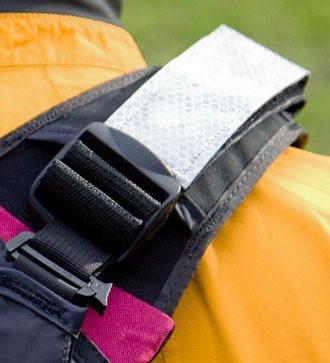
    If your PFD doesn't have any reflective strips on it, adding reflective strips to the shoulders is a must for better visibility. Reflective strips for PFDs are available from:


    Stay Hydrated
    With a hydration bladder, you won't have to sacrifice your pace and rhythm to stay hydrated. The NRS PFD Hydration Pack straps to most PFDs and can be worn as a backpack when off the water. Kokatat also makes the Tributary Hydration Bladder but it will not fit many of the PFDs on the market.


    Storage Solutions
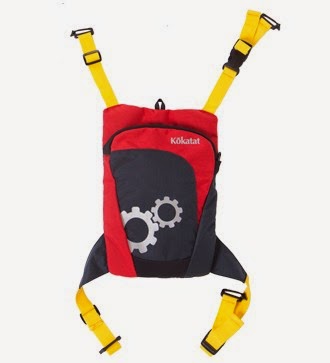
    If you just can't fit everything onto your favorite PFD, there are several solutions. Kokatat has a variety of options that strap to Kokatak brand PFDs, that may also work with other brands.

    The Tactic Pack straps to the back of a PFD, has room for a hydration bladder and a VHF radio, and cleverly unclips to allow the wearer to access those items while paddling.

    The Belly Pocket attaches to many PFDs with front adjustment straps and keeps important items handy.


    Did you find this post helpful? Do you enjoy reading this blog? Help me keep it going by buying me a 'coffee'


    Comfortable Beach Camping; The Magic of Baby Powder


    If you have never camped on a beach before, it seems like a novel idea. It sounds romantic, relaxing, peaceful, playful and fun.

    If you have ever camped on the beach, you may use less glamorous adjectives like gritty, dirty, sweaty, crunchy and others. Sand and salt are what make the beach beautiful and miserable, unless you come armed with baby powder.

    Baby Powder?! What's so magical about baby powder?

    This Gypsy Life- Working Seasonal Outdoor Rectreation Jobs Year-round

    As many of you know, for the past few months I've been bouncing between different jobs. I made a decision a few months ago to try do the seasonal thing full time. There are lots of outdoors-y people out there who do it and I had an opportunity to do the same. Basically the ultimate goal is to find the most awesome, well paying job in the coolest place while its the best time to be there and then when it becomes not nice to be there (like really hot summers or extreme winters) to be there, go some other awesome place. Sometimes this works out, sometimes it doesn't

    This lifestyle has some pretty sweet benefits. Because I do different jobs during different parts of the year, I don't get bored. I live (for the most part) rent free, as most places provide seasonal housing. I get to be active and outdoors and get paid (relatively well considering) for it. Often jobs like this are in really cool places, and they pay for you to get there. It seems like the perfect life, but there are hardships and problems that come with it. Below I've listed and expanded on the benefits and troubles with this lifestyle.

    On to the good stuff:

    free or cheap housing

    Many places I've worked provide room and board. This is a tremendous help when you need to start saving or need to pay off debt. When looking for new work, especially in a new place, this can make or break my decision to work there. I have lots of friends who bounce around places like this and hardly ever pay rent.

    time outdoors
    my job is outside, often in a beautiful place. There is something special about living in rhythm with the natural world. You feel this deeper connection to not only the world around you but to the past and future as well.

    active bodies and minds

    Generally, I feel better when my body and my mind get lots of exercise. I think most people feel the same way.

    free travel
    So far, the only places I've been to for free are the United Arab Emirates and Oman. Hopefully that list will grow in the not so distant future. I have friends who have been all over the United States and all over the world doing these types of jobs.

    seeing and experiencing awesome places

    When I go places, I get to experience them, meaning they become part of my identity, part of my experience. These places impact me and the other people I am there with. When I've traveled as a tourist, I've noticed that sometimes I leave without a real feel for the place. So often as a tourist, a place is a beautiful sunset, some souvenirs from a store, a few photos taken, smiling at some important location. But sometimes those places don't become part of an identity, part of who and what and why one is. This is why I use the word "experience" instead of "see."

    meeting new and awesome people

    People I've worked with and for have positively impacted my life in so many ways. In this field, I've met all kinds of people with extremely varied life experiences.

    networking withing my field

    Most of my jobs have come from previous jobs. I got my job at Sea Base through my job at Great Outdoor. I got my job at Absolute Adventure in the UAE from my job at Pamlico Sea Base. I tell people who want to get into the field that it only takes one good summer job at a well established company to kick start your career.

    a deep and peaceful sense of self
    There is something about the combination of communing with nature, leading others and pushing your own physical and mental limits that gives you this unwavering, peaceful and comfortable sense of self. When I'm out there, I know exactly who, how and why I am. I have yet to be able to convene with this self when I am in the front country. I'm working on that one.

    I never have to wear heels or suits

    The closest thing to a dress shirt I have to wear is a button up fishing style shirt to protect my skin from the sun. It's pretty nice to get to wear jeans and t-shirts to work. Sometimes I get to wear a bikini to work! And, I get to save the heels and mini-skirts for fun things like dates!

    The Tribe Mentality
    I often take for granted the level of trust I automatically get from my participants. They are forced to trust me because they are in unfamiliar territory. Usually by the third day, the trust spreads out. I've proven myself to them and they choose to give their trust. My relationship has grown with them to a point where I know that if I need help, I ask for it. As the only guide with 13 to 17 people, I am often completely overwhelmed in emergency situations. I am proud and thankful to lean on my participants (and vice versa) in times of need. There is such an awesome dynamic in a group that works together like a tribe. Everyone knows everyone else's strengths and the team functions as a cohesive unit when problem solving. You feel closer to people you spend a week with than you do to people you have known for years. Challenge, risk and cooperation form amazing bonds!

    autonomy
    When I am out in the back country, the varying factors are weather and the people I am leading. Because I am the guide, I make the final decisions- although my participants safety and mental well being are my top priorities. There is no one above me telling me what to do, or when and how to do it. This is critical in emergencies when autocratic leadership style is most effective.

    I've had countless conversations with people who had no idea that this kind of life was possible, and were shocked that could be sustainable. Often, people are either envious or inspired. Some people just think I'm crazy. I've talked to adults, well established in their careers, who look back enviously and imagine what would be different if they had chosen differently. Other adults are thankful for their inside job, stability and house and wouldn't want what I do. Others are just excited for me. I was amazed to find how few people my own age and younger have no idea such a life exists. Its not even on their radar. It wasn't on mine until I worked at Camp High Rocks and saw another career path. I guess with all the focus on college and degrees and "real jobs" its hard imagine what else might be out there.

    The tough stuff:
    This life seems glamorous and captivating, which, I have to admit a large part of it is. The awesomeness of this lifestyle does come with its share of troubles. They are definitely something to consider before you decide to take the plunge. I discovered these pitfalls through experience and a few of them have definitely caused chaos and heartache.


    its really hard to deal with health problems
    I don't mean like dealing with a sprained ankle on a trip. I'm referring to needing to get prescriptions filled or having dental work done etc. I have to work really hard to schedule things to prevent unexpected problems during the times I won't be able to get away to handle them. Sometimes I need prescriptions filled before my insurance company will let me because I'll be gone when that day comes up. Our days off are typically weekends, days when doctor's offices are closed. And when we're working, we're committed to a full 5 days in the back-country with a group. If you need a day, it impacts the whole week. Also, if your jobs move you around quite a bit, it can be hard to see a new doctor all the time. You may grow tired of explaining things over and over again to different doctors or transferring paperwork all the time. If you have a weird health problem going on that you need lots of tests for it can be really frustrating and complicated to get treatment.


    the "real world" for everyone else isn't yours

    you'll often find the difference in experiences can push you apart from friends and family. Your experiences can be so radically different from theirs that sometimes it's hard for you to identify with each other or understand each other. I've found you need to work really hard to either really listen and empathize with each other -or- leave your back country experiences in the back-country (take the life lessons with you though!) and live 100% in the moment when you are with those people. It can also be hard to sustain long term romantic relationships if you're constantly moving around. If that person is moving with you, chances are he or she is working with you. This means you are working and living together. Working with the person you are dating or married to isn't always easy and doesn't work for everyone.

    work can be physically, emotionally and mentally exhausting
    Most jobs like this require a significant amount of physical exertion. If you work as a guide, you may be "at work" 24 hours a day for 5 or more days. Some guides spend weeks and months in the back country. Your work days may include early mornings and long physically tough working hours. If you have problems in the back country, you may have to function on very few hours of sleep. Because the season is often pretty short, you might only get one day off a week, or one day off every two weeks. Most guides I know can fall asleep just about anywhere they need to. Because you are "on" all the time out in the field, it can be hard to keep up the attitude you need to provide your participants with a positive experience. It can be draining to force yourself to keep worries and negativity silent, or to stifle parts of your personality that don't mesh well with your participants.

    high risk and stress levels

    Many outdoor sports are pretty dangerous. Risk is an inherent part of these sports, as well as an important part. (I'll go into why risk can be a good thing in a later post.) Outdoor activities include inherent risk (risk that is an integral part of the activity plus there is always the risk of dangerous weather) Dangerous situations cause stress. Being in charge of the health and well being of others while in those dangerous situations greatly increases this stress level.

    not enough "me" time
    If you are a guide, much of your time is spent out in the field. This has a massive impact on the amount of time you have to yourself to do things you want to. When I worked at High Rocks and was a counselor, I was in camp the vast majority of my time at work. This meant that at night, I slept in my home at camp where I had access to my personal belongings, a phone and sometimes internet. When I am out in the field at Sea Base, I usually have enough room in my kayak to bring a journal and a book to read. Things like checking email and doing my other hobbies are limited to my day off.

    paying bills, receiving mail etc

    When you move around a lot, you have to really stay on top of changing your address with every company you owe money to. I have set mine up so that my parents receive all of my important mail like my bank statement, college loan payments and others. They live over 2 hours from where I work. If I needed any of that paperwork I would have to drive there to deal with it or call them to have them help me. The other option is trusting my mail to the place I work. I also recently discovered that many banks won't approve you for a credit card if you hold seasonal work. Even if you work full time the whole year and that time is made of seasonal jobs, they may not approve you.

    These are some of the problems I am willing to deal with and work around in order to benefit from the positives of this lifestyle. Maybe one day I'll get burned out and decide to get a "real" job. Lots of people get burned out. I have a friend who just got to a point at which she wanted a normal social life, a routine, a bigger paycheck and a boyfriend. She is starting school to become a nurse. I'm hoping I'll see more of the world before that day comes but we'll see how it goes.

    Review: At home Chartmaker from NOAA online

    I recently picked up a copy of the August edition of Sea Kayaker magazine and was excited by one of the articles: "Do-It-Yourself Charts, NOAA Online Makes it Easy." The article explained that NOAA (the National Oceanic and Atmospheric Administration) had taken most available US Coastal waters charts, put them into digital format and made them available to download online for free. Being able to print charts at home is beneficial in a couple of ways. First, the charts for sale are pretty expensive, around $20 per chart. Second, the charts available for sale are much too large to use easily on the deck of a sea kayak. The article claims that now, you can make your own kayak friendly charts. National Geographic, as well as a few other companies, make waterproof paper you can use with an inkjet printer. If you want to print your own charts, head here:
    NOAA Booklet Charts
    Here is a link to waterproof copy paper:
    National Geographic Adventure Paper
    I was hoping to use this new resource to enable us to make our own awesome maps and save Sea Base some money. I downloaded two charts that cover the area we usually kayak over the course of five days. I was pretty disappointed. The article I read made it seem like these charts were pretty customizable. They aren't. NOAA has divided the large scale chart for you. Basically take the original chart and divide it up by letter size paper. You can't choose where the chart is divided which is extremely inconvenient for our situation. Here is the front page of the chart we use, showing how NOAA divided it:

    In a day, we often paddle from Shackleford (section 12) South East toward Core Banks (crossing into section 13) and south through the boat channel to Cape Lookout. To go any further south than Cape Lookout moves us back to section 12. So within a 3 hour paddle, you may have to switch from one chart to the other twice. Not to mention that the when the boat channel enters Barden Inlet, it runs right on the seam of the two sections. Right out in the middle of the boat channel, in the middle of the inlet, is where I would have to switch maps. Not convenient. When we paddle North East up to New Drum Inlet, along South Core Banks, headed to North Core banks, we are forced to use section 10 to cover only about 4 miles of paddling, right at Drum Inlet. Here is the full map, in use. I am showing my group how far we paddled that day.

    I would have to print 5 pages of this chart and switch constantly if I downloaded it instead of buying the one piece chart. Definitely not worth the trouble. What they should do is make the entire undivided chart available to download and let people use their own software to zoom in, rotate and/or crop to make their own charts. This would make it possible to print charts of the route that flow together conveniently and don't include areas they find unnecessary. If I could get the entire chart in a digital version, I could zoom into the area I wanted to print, rotate the map to make the best use of space on the paper, and then print the chart onto waterproof paper. The way the down-loadable charts are currently divided, I'll stick with my $20 super-sized, waterproof chart. Plus, my super sized chart has the entire area on one side, and then a zoomed in, detailed view of Shackleford Banks and Cape Lookout on the other side. The chart I currently use is available from MapTech. It is Ocracoke to Beaufort: WPC091-2.

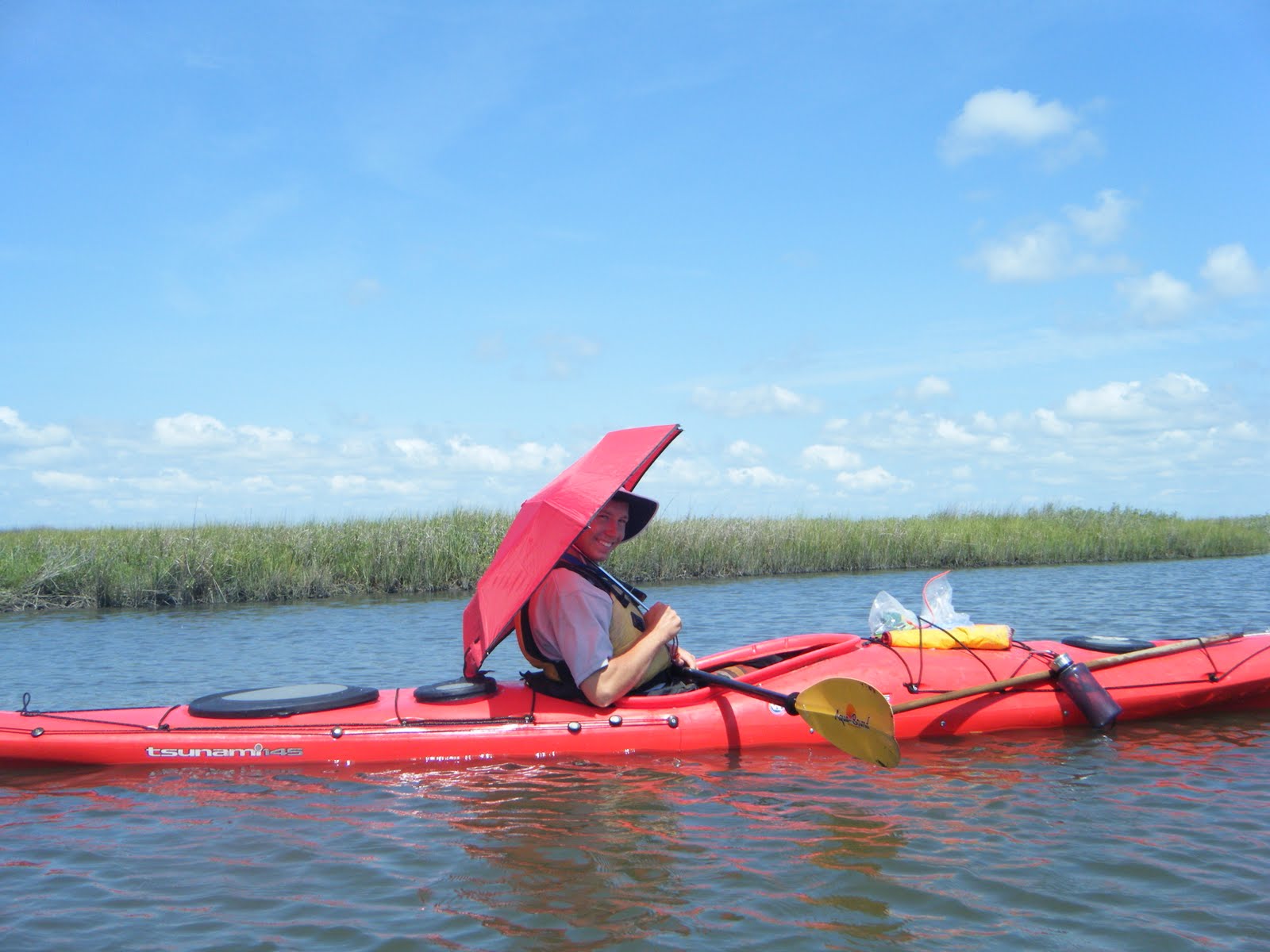
    Why you should always bring an umbrella sea kayaking...

    An umbrella? Why bring an umbrella sea kayaking?
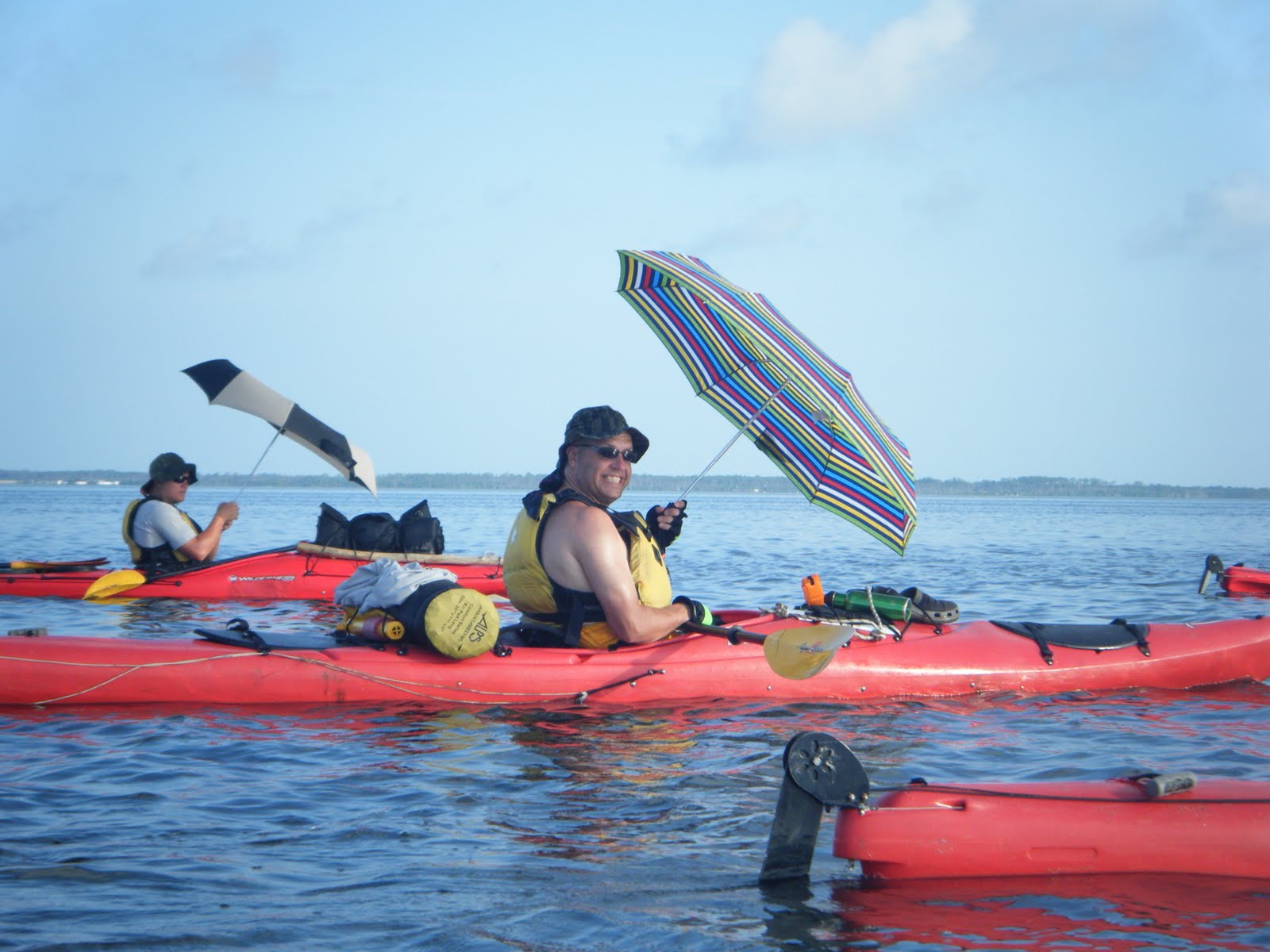
    You can use it as a sail. If you have a decent tail wind, hold your umbrella out in front of you and steer with your rudder or by putting your kayak on its edge. If you're crafty, you can rig your umbrella up so you can sail and paddle at the same time.


    Shade. You can rig up your umbrella behind your back for some shade while you paddle.
    I stuck mine down the back of my PFD
    Don't loose your umbrella!
    I store my umbrella on the deck of my kayak under the rigging for quick deployment.

    If you decide to take an umbrella next time you go, make sure you get a nice golf style umbrella. If you don't get a sturdy one, and you try to sail with it, the wind will just flip it out and break it. A big nice golf umbrella works brilliantly as a sail. I also suggest buying a clear one so you can see where you're going. We had a few near collisions with duck blinds due to umbrella blockage.

    More sea kayaking tips from Ali:
    Clothes for warm weather sea kayaking

    Review: Stohlquist Kitty PFD


    I got really lucky last week; I got a nearly brand new life jacket for free. Reggie (my boss) had a size small, women’s specific Stohlquist brand touring life jacket. I’m not sure if I would have chosen it for myself if I were ordering one, but I sure was glad to get it, and it fit! I’m used to wearing a Chica by Extrasport. So I tried them both on in my room to compare and decided to take a big risk: test the new jacket during a week in the field. Why was this risky? If I found out after an hour of paddling I hated the jacket, I had to paddle 20 or 30 more hours in it. This life jacket was superb throughout the trip and I continued to use it all summer. I never had any rubbing or chaffing problems. My perspective is from a guide, paddling 5+ hours a day in my life jacket. I am 5'2," 130lbs and wear a 34B. Here are some things I love about the jacket, and a few things I might change.

    Great things:
    *the foam in the chest of the vest is cut away to keep from squishing breasts
    *the front pocket is nice. It’s easy to stick my hand into and dig around but wasn’t big and bulky. The pocket is completely flat, but ingeniously they put two pieces of neoprene at the edges to give the pocket enough stretch to dig around in.
    *low profile and out of my way. My arms never rubbed against it when I paddled
    *reflective piping for visibility in low light
    *an accessible place to put my rescue knife
    *mine is orange, which is very visible during the day from a long way away
    *there are two buckle points that reinforce the zipper. You can buckle (quick release buckles) it closed before you zip it, which makes zipping it faster and easier.

    Things I would change:
    *It’s a pull-on style PFD which got pretty annoying because I wear a big hat when I paddle. When we stopped on an island I had to take my hat off to take my life jacket off. Of course, the Extrasport Chica I compared it to has a zip front. This makes for easy on/off except that as the Chica wears the zipper gets harder to zip up and there is only one buckle point at the bottom of the vest. So the pull on could be an advantage in some ways.
    *this PFD would probably be problematic with a kayak that has a high seat back (instead of a back band) because the lower back of the PFD is rather thick
    *the shoulder straps aren’t adjustable in length. If I had bigger breasts, the life jacket would probably ride up all the time or suffocate me.
    *I would add another knife placement on the back of the jacket, up high, in case I wanted to carry two different knives or keep my knife on my back instead of in front of me
    *the knife placement was sometimes annoying. I usually didn’t have problems, but a couple of times got things caught on my knife. I have a NRS Co-Pilot.

    I really like this jacket and am really lucky to have gotten it for free. Many kayakers who spend long hours paddling may want more pockets or more adjustment. I really like this jacket, but if I were buying one, I might also consider the TowMotion or the Cruiser by Stohlquist.

    Shopping for a kayak? Check out Ali's review of the Tsunami 160 by Wilderness Systems