



-
I love making things myself. I've always dreamed of having my own outdoor brand- not a very feasible business idea that I would pr...
-
 While working as a sea kayaking guide, I had to repair some enormous holes in plastic kayaks. One of our trailers was built for canoes...
 -
 DIY Tiny Custom Deodorant I am so picky when it comes to deodorant, and have never found my favorite kind abroad. I typically travel wi...
 -
 I paddled this kayak on every trek I lead from 2009 to 2012. I racked up somewhere around 900+ miles in it, in all kinds of cond...
 -
Take the Right Tent A tent in the wrong environment spells misery, no matter how well you set it up! High winds: ( beach, mount...
Better Than Stuff: Meaningful Outdoor Gifts They'll Love
SHARE:


How To Stay Cool When It's Hot As $#*! Outside
 Summer is *almost* here and it's already getting crazy hot and humid. For some reason, I tend to gravitate toward VERY hot places, and happen to go there during the hottest time of year. The most extreme example was heading to the Sahara in August!
I learned a lot from the cultures who have thrived for thousands of years in those insanely hot places, and now I'm sharing what I've learned.
First Some Science!
A crucial part of staying cool is understanding how heatFirst Some Science!
 is transferred and how our bodies self-regulate. I want you to imagine that you are a little campfire. Why? Your body creates heat. What we have to do in summer and winter is figure out how to either hold onto that heat (in winter) or get rid of it (in summer). Imagine you're in a cabin with a nice little fire in a small fireplace. It's snowing outside. Do you want the cabin to be small or big? A little fire can warm a little cabin, but not a big one, so in winter we need a small cabin. Now let's imagine it's a hot summer day, and we've got that fire going. Now, we want our cabin to be big, and maybe we'll open a few windows and turn the fans on to try to let that heat out. Remember, putting out the fire means we are no longer alive, so all we can do is adjust the size of the room. This blog post is how to accomplish that.
Heat moves in 4 ways:
- Conduction: The process by which heat or electricity is directly transmitted through a substance when there is a difference of temperature between adjoining regions, without movement of the material.
AKA: touch cold things, don't touch hot things
- Convection: the transfer of heat by the circulation or movement of the heated parts of a liquid or gas
AKA use wind and water to take heat away from your body. - Radiation: the complete process in which energy is emitted by one body, transmitted through an intervening medium or space, and absorbed by another body.
AKA: heat from the sun, body heat. Stand close to cool objects, stand far away from hot objects or put a barrier between you and the hot object. - Evaporation: water molecules heat up until they have enough energy to transform from liquid into gas- effectively 'transferring' that heat into the surrounding atmosphere
We'll utilize conduction to transfer heat out by touching cold things- like ice and shaded rocks. When I was in Morocco, I would find a cold tile floor in the bottom of a building and lay on it- letting it suck away my body heat. We'll prevent conduction by not touching hot things like sun baked black cars.We'll use convection to transfer heat out by swimming in cool water and standing in front of moving air.
We'll help our bodies radiate body heat by wearing thin, loose fitting, minimal clothing. We'll prevent our bodies from absorbing radiant heat by getting out of the sun and staying away from objects that radiate stored heat (like concrete buildings and black top parking lots)
The Science of Sweat
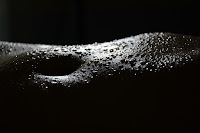 When it's hot, we sweat. Our bodies push a combination of water, salt and minerals out our sweat glands an onto our skin. When those molecules get enough heat energy from our skin, they evaporate, effectively 'taking' that heat with them. This process is not 100% efficient, and is very dependent on the humidity of the environment. In a hot and humid environment, like a jungle, sweat just doesn't work very well to cool us off, and instead we end up with soaking wet clothing. This is why it's so important to wear fabrics that help that water evaporate as much as possible- which I'll get into later.
We'll help our bodies radiate body heat by wearing thin, loose fitting, minimal clothing. We'll prevent our bodies from absorbing radiant heat by getting out of the sun and staying away from objects that radiate stored heat (like concrete buildings and black top parking lots)
The Science of Sweat
 When it's hot, we sweat. Our bodies push a combination of water, salt and minerals out our sweat glands an onto our skin. When those molecules get enough heat energy from our skin, they evaporate, effectively 'taking' that heat with them. This process is not 100% efficient, and is very dependent on the humidity of the environment. In a hot and humid environment, like a jungle, sweat just doesn't work very well to cool us off, and instead we end up with soaking wet clothing. This is why it's so important to wear fabrics that help that water evaporate as much as possible- which I'll get into later.
SHARE:
The Captivating Mystery of Wilderness

Wilderness is a refuge for the human spirit.
I look out over wild places and wonder at their mystery. What secrets lie hidden in the depths of the forest? What will I discover around the next bend in the river, over the next precipice of mountain? For every step I take and every discovery I make, there lie millions ahead yet to be discovered. This is the magic of wilderness- that it both beckons us to explore, and yet no matter how far or deep we go, retains its mystery.
-Wayfinder Ali
Did you like this? You'll love these:
SHARE:
DIY Ultralight Adventure Travel First Aid Kit: Small Groups Multi-Day [Printable]

I want to make sure that I can properly care for myself and my companions. In this post I'll share with you what I bring and why.
The kit detailed in this post is for a group of around 4-6 people for up to a week-long trip.
The kit detailed in this post is for a group of around 4-6 people for up to a week-long trip.
Equip Your Mind: Knowledge is Paramount
 |
| Learning about spine stabilization during my Wilderness First Responder course in UAE |
The best kit is useless if you don't know how to use its contents.
A medical professional can often save a life by improvising with whatever is at hand. The best way to prepare for any kind of emergency is to ready yourself with knowledge and practice.
I recommend taking a Wilderness Advanced First Aid or Wilderness First Responder class before traveling. WAFA is a comprehensive course that gives you the tools and mindset you need to handle medical emergencies in any environment. If you're planning a water-based adventure, take a lifeguarding class in addition to WAFA. If WAFA is too expensive, consider the basic Wilderness First Aid course.
Wilderness Medical Organizations

 |
| Wilderness Medical Associates |
 |

Pre-stocked Kits
I never buy pre-stocked kits because they are so pricey. I can stock a kit with what I want and need for much less money. A pre-stocked kit is a great starting point. It will equip you with the basics and is typically stocked based on trip size and duration which is incredibly helpful. If you choose this route, grab a pre-stocked kit that fits your trip size and duration, then customize it for your specific trip. For pre-stocked kits, I recommend the Adventure Medical Kit brand. They come in absolutely the best bags. The bag unfolds to create a work space and they are very durable. Stay away from Wal-Mart and Target kits because they are made for use in the front country where quality care is close by.
Things to consider when packing your kit:
- Group Size- More people = more problems. You will need more of everything. If someone has a high fever, you'll go through Tylenol (acetaminophen) very quickly.
- Trip Duration- longer trips mean more potential for sickness and injury
- Trip Location- Will you have access to quality health care where you are heading? How far removed from that medical care will you be? Are there lots of pharmacies where you can restock? It is a smart idea to bring broad spectrum antibiotics to third world countries where they may be hard to find or fake. Some people even bring their own IV kits to places where contaminated needles are prevalent.
- Planned activities- Going snorkeling? Bring tweezers and vinegar for sea urchins and jellyfish. Hikers need more moleskin and splinting supplies. Everyone heading to third world countries should bring extra re-hydration salts for food poisoning. High altitude trekkers should have detailed knowledge of altitude illness and stock their kit with Diamox
- Pre-existing conditions- Prone to motion sickness? Bring extra Dramamine. Pre-existing conditions often worsen during times of stress. Ensure all travelers have extras of their prescription medications. Plan ahead for dealing with flare ups of issues like heart conditions, joint injuries, and diabetes.
SHARE:
Cowboy Coffee: How to make coffee without a filter

On my first overnight pack trip at Rock Creek Pack Station, I learned the trick.
Here is what you need:
- A heat source
- A metal kettle or pitcher
- Coffee grounds
- Water
- A small cup
Directions:
- Fill the kettle 3/4 full of water and put it on your heat source to boil
- Fill the small cup with the coldest water you have
- Once the kettle water is boiling, slowly add the coffee grounds. Be careful because adding coffee grounds can make your kettle boil over. If it looks like it is about to, pull it off the heat for a second or two
- Boil the coffee for a couple of minutes
- Reduce the heat to low
- To get the coffee grounds to sink to the bottom, pour the cup of cold water over the grounds
- Pour carefully and the grounds will stay on the bottom
SHARE:
DIY Outdoor Gear Resources to MYOG

I love making things myself. I've always dreamed of having my own outdoor brand- not a very feasible business idea that I would probably end up hating in the long run. With all the technical fabrics available online, we are no longer bound to the products made by big outdoor brands. You'll find fabric, patterns and tutorials online for everything from backpacks to tents to sleeping bags and rain jackets. I've put together the resources I go to when I have a project. If you know of any that I haven't listed, please mention them in the comments.
Forums
WhiteBlaze.net This is a community of Appalachian Trail enthusiasts with TONS of info on the AT- you can get answers to all your AT questions. There is also a forum on here for DIY gear.
BackpackingLight has forums dedicated to a variety of topics including a MYOG Forum (make your own gear) To post to the forum you must have a basic membership to the site which costs $5 a year
Backpacking.net has a little corner of their website dedicated to a MYOG forum.
Backpacking.net has a little corner of their website dedicated to a MYOG forum.
MYOG on Reddit - A fantastic forum full of resources, projects and advice
SHARE:
DIY 20°F Backpacking Quilt Part 2- Marking and Cutting
What you need to mark and cut
- Weller Woodburner or a hot knife. Any nylon fabric needs to be cut with heat so that the edges are sealed and will not unravel. Even capturing the edge with a french seam only delays unraveling.
- Some sort of heat-resistant material to put under your shell and liner fabrics- either a piece of wood, metal or glass. A few people online have used scissors to cut the fabric and then sealed the edge with a lighter, but they say it is extremely easy to accidentally melt too much fabric.
- Good Sharp Fabric Scissors at least 9" long if you are working with thick insulation like I am. If your insulation is thinner, smaller scissors will work. Just make sure they're sharp.
- Permanent fine tip marker
- Tailors chalk
SHARE:
DIY 20°F Ultralight Backpacking Quilt for $100 Part One
 |
This is what I already have-
The fitted sheet and tech blanket by
Thermarest
|
- The insulation underneath you in a sleeping bag gets so compressed that hardly provides any insulation
- Quilts weigh less
- I toss and turn at night and sleep on my stomach, back and side. Mummy bags annoy me.
- I already have the Thermarest sleep system which consists of a fitted sheet for my sleeping pad and a very lightweight tech blanket that snaps to it. I plan to use my fitted sheet with my DIY cold weather quilt.
- I couldn't afford a high quality 20°F mummy bag that weighed a reasonable amount.
Why bother making it myself?
- I have read online that people with no sewing experience have been very successful making these. I have a good amount of sewing experience so I hope it will be easier for me.
- The wait time to get a quilt from a manufacturer is up to 8 weeks and I didn't have that long to wait.
- I saved $80 by making it myself
- I get to make my blanket in the colors I want and with all the details I want
Design and Dimensions
I think the Prodigy is a good product at a reasonable price ($180), but I really needed to save the $80 and make it myself. I also wanted specific colors and a specific kind of liner fabric.
I picked this design for several reasons:
 |
| Prodigy Quilt by Enlightened Equipment |
- A casing (sewn channel of fabric) at the shoulders and foot with a bungee cord inside make it easy to create a foot box and cinch the quilt around the shoulders, eliminating heat loss.
- The simplicity of the design lends itself to ease of construction- it is a simple polygon without a hood, pockets or sewn channels
- The Enlightened Equipment website provides the exact dimensions for quilts to fit different sized people which eliminated the guesswork of figuring out how long and wide my quilt needed to be in order to be comfortable for my size. Here is a link to their Quilt Sizing page which has all the details.
I used the specs for the Short length, Narrow Width quilt which is for little people up to 5'6" who sleep on their backs or toss and turn at night. The finished specs for it are as follows:
Basic Specs:
Total length: 72"
Top half width- 50"
Tapers to 38 " at the foot box.
I chose to make my quilt go to 20°F because I tend to be a very cold sleeper. Here is a chart to help you choose which weight Climashield you should use:
2.5 oz - 50°F $7.00/yd
3.6 oz - 40°F $9.00/yd
5.0 oz - 30°F $10.95/yd
7.5 oz - 10°F $16.95/yd
10 oz - 0°F $23.50/yd
Materials List:
- 1.0 oz HyperD calendared Ripstop nylon 3 yards $20.85 (outside of quilt)
- Hexon 1.0 2 yards $13.50 (inside of quilt- because it is very soft and light)
- Climashield 7.5 oz, 2 yards $33.90
- 1 yd 1/2" grosgrain $0.25
- 4 mini cord locks $2.80/dozen
- 1/16" bungee or paracord 3 yards
- 5 yards 1/2" flat elastic for sleeping pad straps
- 10 1/2" center release plastic buckles $8
- Guterman MARA 70 thread (free with fabric purchase from RipstopByTheRoll)
Total Cost: $96 with shipping
Tools and necessities:
- Sewing Machine with walking foot
- Quilting Straight pins at least 1 3/4" long
- Hot knife / Woodburner with blade tip or scissors and lighter for cutting nylon
- Lighter for sealing cut ends of bungee and elastic
- Measuring tape
- Yardstick or long straight edge
- Square
- Tailors chalk
- Dumbell weights to hold materials down
Connection Options
Many quilts including those from Enlightened Equipment and Thermarest have systems to connect the quilt to the sleeping pad. This keeps the quilt from moving around when you toss and turn.
 |
| The Enlightened Equipment quilt strap system |
The Enlightened Equipment system uses small clips along the sides of the quilt that correspond with clips on pieces of elastic that fit around the sleeping pad. This enables the user to snug the quilt up tightly around the body in cold weather. This system would be easy to integrate into a DIY quilt. Here is a link to a detailed description of how that system works.
 |
| Thermarest Loops and Snaps |
Someone on the Hammock Forums mentioned adding 'draft stoppers' to the edges of
 |
| The darker blue fabric on the edges is the draft stopper |
Did you find this post helpful? Do you enjoy reading this blog? Help me keep it going by buying me a 'coffee'

Did you find this post helpful? Do you enjoy reading this blog? Help me keep it going by buying me a 'coffee'
Ready to get started? Click HERE for Part Two
SHARE:
Outdoor Gift Guide- Stocking Stuffers
 Every year we struggle to buy presents for those outdoorsy people in our lives. You either have no idea what they actually do out in the wilderness, or they already have everything! What should you give?
Stocking stuffers should be unique, fun, small and not too expensive. Here are a few of my all-time favorite outdoor things under $30.
For the Survivalist
- Paracord Fire Starter Necklace by The Friendly Swede $11.99
- Emergency Bivvy by Survive Outdoors Longer $14.95 protects against rain and wind and reflects 80% of body heat
- Spool Tool Paracord Spool
holds 100ft of paracord, with blade and lighter holder $16.50
- Luci EMRG
Solar powered, inflatable and waterproof lantern with white setting and SOS red flash $14.95
- Paracord Knife Survival Bracelet $14.86


- Fozzils Bowls
unsnap to lick clean and pack flat Set of two $9.95
- MSR Alpine Pot Brush / Scraper
$4.95
- Sea to Summit X-Seal Go collapsing food container bowl with airtight lid holds leftovers $26
- Light My Fire Titanium Spork
- The classic Light My Fire Spork, in titanium so you'll never break it again
- Titanium Long Handle Spoon
keeps hands clean and away from hot liquids $9.95
Help them make their gear last longer with products to clean, protect and rejuvenate outdoor clothing and equipment.

- Nikwax Tech Wash because detergent will ruin most waterproof clothing and down
MiraZyme Odor Eliminator
is a nearly magical concoction that will make your stinkiest clothes and shoes smell like absolutely nothing at all
- Nikwax Concentrated Tent & Gear Solar Proof Outdoor gear like tents and hammocks take a beating from UV light which breaks down nylon and polyester. This liquid protects gear from UV rays.
- Sawyer Permethrin Clothing Insect Repellent Spray
uses a compound from chrysanthemum flowers to keep insects away. Spray your clothes, let them dry, and you'll have 6 weeks of protection.
- Nikwax Down Proof Waterproofing
rejuvenates down, gives down water repellency and rejuvenates water repellency of shell fabrics
- Gear Aid ReviveX Instant Waterproofing Spray
renews waterproof finish of rain jackets, tents and sleeping bags

 rejuvenates down, gives down water repellency and rejuvenates water repellency of shell fabrics
 renews waterproof finish of rain jackets, tents and sleeping bags
For the rock climber in your life:

- Arno Ilgner, the author of the classic “The Rock Warriors Way,” brings us “Espresso Lessons;” practical lessons for on and off the rock. $19.95
- Misty Mountain brings back the Bouldering Scratch Mat for the boulderer in your life. $9.95
- Some climbers go through climbing tape like you wouldn’t believe. Plus it doubles as medical tape. $3.95
- Keep them pumped out even in the off season with a Dynaflex Pro Gyro Hand Exerciser
- Make their favorite pair of shoes last longer with Five Ten’s Stealth Paint Repair Kit $16.99
- If all else fails, buy them some Super Chalk. Chalk is like Clif Bars, it’s always good to have a reserve.
- Does your climber play well with others? Chances are they climb well with them too. Black Diamond’s Gorilla Chalk Bag is big and flat bottomed, a communal chalk pot perfect for group bouldering sessions.
Endurance Athletes

- Keep their noggin and ears warm on a run, ride, or paddle with a windproof Gore Bike wear helmet cap $25.95
- Chilly mornings often make for warmer afternoons. Help them transition without slowing down with Smartwool arm warmers $25
- If they run in Vibram Five Fingers, their toes may be a little chilly in colder temps. Keep their toes and legs warm with Injinji's new outdoor calf length merino wool toe socks $16
- Earbuds that fall out are annoying. Koss' Sport Clip Headphones won't fall out.
- Keep them amped, even while on the couch with Christopher McDougall's Born to Run $15
- Hard work on cold days often makes for sore muscles. Ease their pain with a Body Wrap from Carex.
- Keep their hands warm during 3 seasons with these Manzella Silkweight Windstopper Glove When it's just chilly, they block the wind without overheating. Add a liner glove for toasty hands on colder days.
- Fuel them to the finish line with Cliff Energy Shots. Compact enough for a back pocket, fast and easy to down on the go.
- L-Glutamine helps with protein synthesis, immune system support, cell hydration and has no known negative side effects. Get it from GNC for just $5.99
- There's nothing less refreshing than warm water after a workout. Polar Insulated Bottles keep drinks colder longer. $11.99
- Help them stay hydrated, without all the sugar. Elete electrolyte additive can be added to water to boost electrolyte levels without the performance zapping effects of sugar. $4.99
- It's hard to find a good skin protection that stays on when you sweat profusely. Sol Sunguard's MultiSport formula keeps skin protected from sun and wind even while sweating. This formula "breates" to let sweat out while retaining its protecting qualities.
- Bodyglide is a must-have for all types of endurance athletes from expedition kayakers to marathoners and cyclists. Sweat and friction combine to make for one uncomfortable experience in really awful places. Prevent it with Bodyglide.
- Cliff Shot Bloks provide simple and complex carb fuel in a pre-portioned package. Just need a little boost? Eat one or two from the pack. Need a kick in the rear? Eat the whole pack.
SHARE:
Sea Kayaking clothes for Warm Weather
Going sea kayaking but not sure what to wear?
 I've spent four summers guiding expedition sea kayaking treks, and over those many hundreds of miles, I've tested lots of clothing options and found what works the best, and what to avoid.
 I've spent four summers guiding expedition sea kayaking treks, and over those many hundreds of miles, I've tested lots of clothing options and found what works the best, and what to avoid.
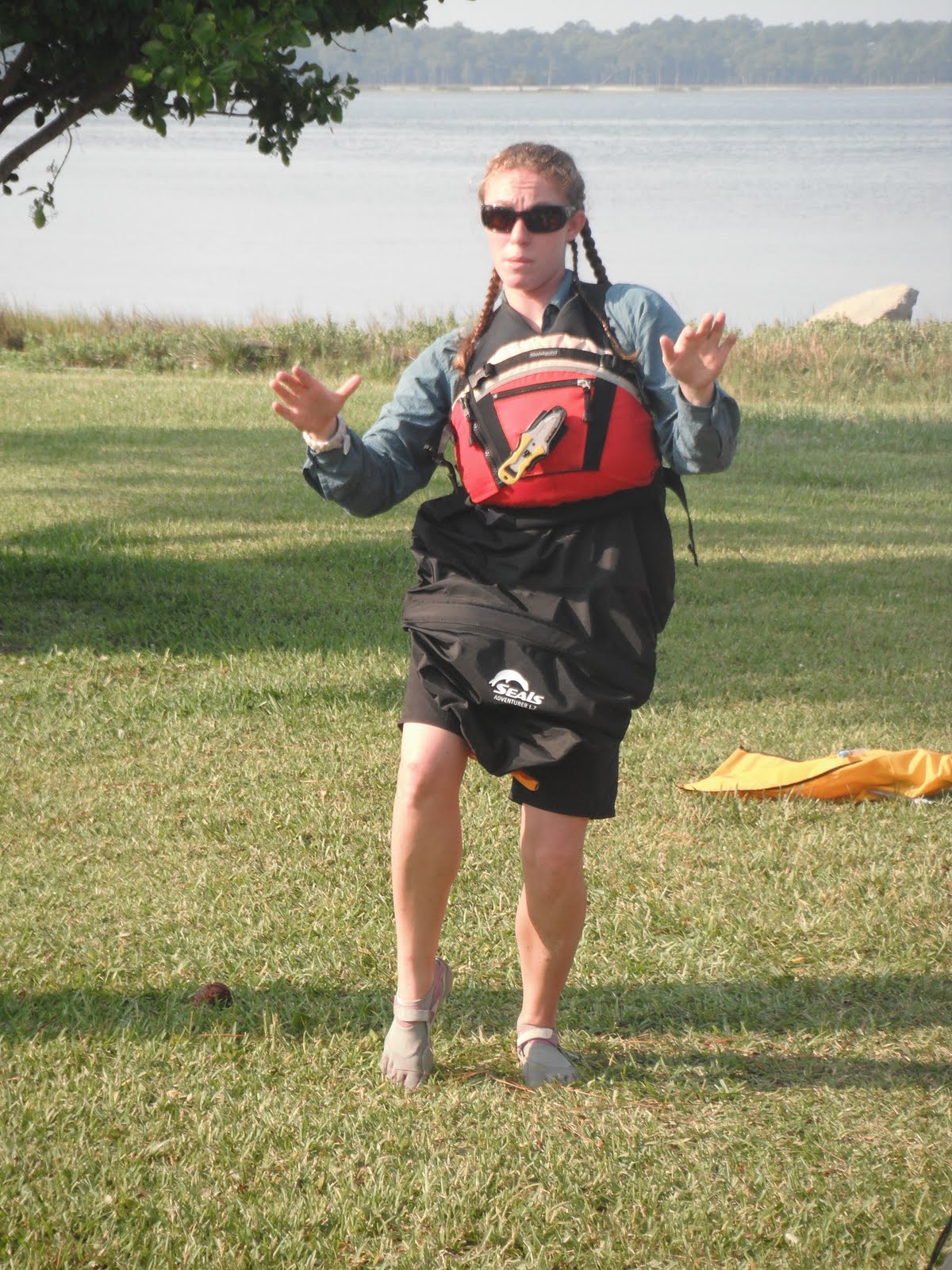 |
| Me in what has become my sea kayaking "uniform" |
During these trips, I learned what was essential, what was a luxury, and what just got in the way. I took just the basics, although I sacrificed extra clothing for a few creature comforts. I wear the same outfit every single day. The only changes in clothing were due to changes in weather. If I got chilly, I put on pants and a very light jacket. If it rained, I put on a rain jacket. Otherwise, I wore my long sleeve shirt and quick dry shorts every single day. I brought one change of clothes I kept clean to change into at the very end of the trip.
I tell my groups to get used to my outfit because it wouldn't change all week. They reacted by telling me how gross it was that I wore the same thing for 5 days. Your clothes will get dirty and smelly no matter if you wear them for one day or 5 days. If you're a bit muddy or your shirt starts to smell, you can always go for a dip in the ocean! Why bring extras when they're taking up valuable space for other things?
Essential Clothing
 |
| George wearing a Columbia Tamiami II shirt and quick dry zip-off pants |
- Long sleeve, button up, quick dry shirt (no rash-guards!!)
- 1 pair quick dry shorts + 1 pair quick dry long pants
- 1 pair of zip-off convertible quick dry pants
- Rain jacket
- Wide brimmed hat, that floats, with a string
- Water shoes or sandals (I recommend: Keens, Vibram 5 Fingers, Chacos)
- Bandana or buff
- Swimsuit (note, your swimsuit will dry much more slowly than you quick dry clothes. I swim in my everyday clothes)
- Rain pants (really only needed for when it rains while you aren't paddling, I never bring any- it's usually so warm I dry pretty quickly anyway)
- Paddling gloves (may be good if you don't paddle much, I haven't used them)
- Underwear (I don't wear any during my treks. just another layer of clothing to get and stay wet) if you bring any, make sure it dries fast
- Light jacket if you're cold-natured
Specific Items I wear:

- ExOfficio Dryflite Shirt (long sleeve, button up quick dry shirt with sleeves I can roll up)
- Moving Comfort Cameo Racerback sports bra
- Prana "Bliss Knickers" (quick dry shorts)
- Prana "Bliss Pant" (quick dry long pants)
- Marmot Crystalline Rain Jacket
- Patagonia Women's R1 pullover (light jacket)
- Vibram 5 Fingers- Women's KSO (paddling shoes)
- Chaco Hipthong sandals (for on land)
- Prana Sabin Racer top (tank top)
- Buff (multifunctional bandana)
- Wide brimmed hat
- Bikini- if I am with friends or headed to Ocracoke, sometimes I'll bring a bikini. It serves as an extra bra top for when I get sick of the sports bra.
SHARE:
Subscribe to:
Posts (Atom)