Pages

▼
Drop Down MenusCSS Drop Down MenuPure CSS Dropdown Menu

Pitch Your Tent Like a Pro

Take the Right Tent
A tent in the wrong environment spells misery, no matter how well you set it up! 
  • High winds: (beach, mountain-top, plains) Take a low profile dome or pyramid. The lower the better! If you're camping on the beach, take a tent that's shorter than the dunes. 
  • Hot and humid: Two wall tent with as much mesh as possible means better ventilation. Go as big as you can get away with- a bigger tent won't get as hot.
  • Cold and dry: Single wall tents are warmer and more wind-resistant. Get the smallest one you fit in, because your body heat will keep a smaller tent warmer. 
  • Raining cats and dogs: Make sure your rain fly covers the tent entirely and reaches all the way down to the ground. A vestibule (a covered 'porch' area under the rain fly) is a gear saver in wet weather.
Follow the Video for the Perfect Pitch
Can't watch the video? Keep reading...


Pack Before you Go
Unpack, and then re-pack
  1. Unpack: and separate the tent, poles, rain fly, footprint and stakes
  2. Stuff don't roll: stuffing protects the waterproof coating on your tent and rain fly
  3. Stuff in opposite order: rain fly at the bottom, poles on the side, then tent, then footprint, then stakes
Use the Right Tools
Buffy chose the right stake for killing vampires.
You should pick the right stake for your campsite
The stakes are high.....
See what I did there?! But seriously, you need the correct type of stakes for the environment you're camping in. Those cheap aluminum stakes your tent came with? Leave them at home.
Forests and general use: MSR Groundhog Tent Stakes are super strong and won't bend when you hammer them, and resist being pulled out due to their design
Sand: 12" Sand Stakes because bigger is better


Set-up in this order
  1. Stake it first: Stake out the footprint and tent, with the narrow side into the wind. Stake down the windward side first. 
  2. Poles: Set up the poles and connect the tent to the poles
  3. Rain fly: Put the rain-fly on the tent and connect it. Connect the windward side first.  
  4. Guy lines and vestibules: Stake out all the guy lines and vestibules to make your tent strong against the wind, and to keep the rain fly tighter. A tight rain-fly will shed water and is less likely to leak. 
Did you find this post helpful? If you did, consider supporting me by buying me a coffee here:

Buy Me A Coffee


Blissful Beach Camping

how to beach camp
Beach camping in Hong Kong
Beach camping is one of those outdoorsy things that sounds like a great idea. Spend your day fishing, swimming, and soaking up the sun then drift off to sleep to the sound of the crashing waves after a glorious sunset.

Our imaginations tend to gloss over the not-so-nice realities of our daydreams. Just like dreaming of moving to Paris means you'll have to learn French and pay 5 euros for a coffee, camping at the beach comes with a few challenges that can make for a miserable time. Has one of your beach camping trips ended in disaster or misery?
Things that (usually) Suck about Beach Camping
  • Sand gets EVERYWHERE, in EVERYTHING
    The worst line in any Star Wars movie? I think so.
  • It's hot
  • Sunscreen is sticky and gross
  • There are bugs that bite
  • Your tent blows away in the wind, or leaks when it rains
So while I can't magically make any of those things go away for you, I can share the tricks I've learned that make camping on a beach actually really wonderful.


How to Pick the Perfect Day Pack

choosing daypack
Are you shopping for a day pack but feel overwhelmed by all the options? Will you be buying your first day pack? With so many packs on the market right now, choosing the right one can be tough. This post will help you make a decision with confidence and save you from buyers remorse.

I have owned and used lots of day packs over my 10 years teaching outdoors, in a wide variety of activities and conditions. I've learned the best features for different activities and environments. 

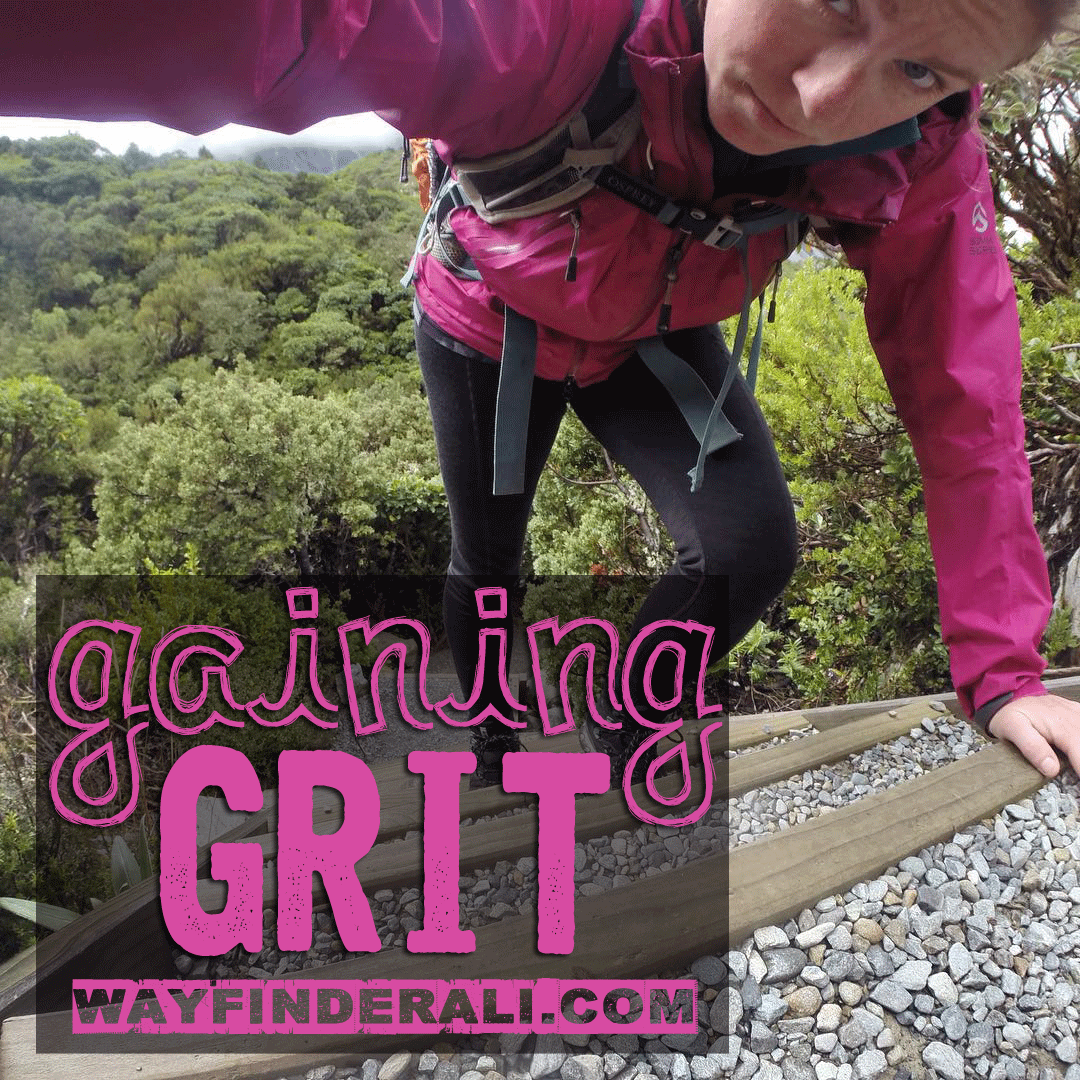
Gaining Grit: How to find and nurture the badass within


One of my many hundreds, perhaps thousands, of
 painful moments outdoors.
After hearing a recap of one of my particularly harrowing adventures, people often react with: "I don't know how you do it." For some reason, many people think that I'm fearless or super fit or something to be doing the things I do. But here's the thing,
I am not remarkable.
Let me tell you, I still cry on really tall exposed rock climbs. I huff and puff and get all red faced while hiking. I hate being cold. The difference between them and me is just a practiced mindset. Many people call this mindset 'grit.' 

Grit is mental fortitude and resiliency. With practice, it becomes an automatic emotional response that kicks in whenever you need it. 


Grit is like any muscle- the more you use it, the stronger it gets. Unlike a muscle, it is a bit trickier to activate.

I am an ordinary human who has been able to make my grit muscle strong. Everyone has grit, you've just got to find yours and strengthen it.

Keep reading to learn what grit can do for you, and how to get it


DIY Outdoor Gear Resources to MYOG


MYOG DIY outdoor gear making resources

I love making things myself. I've always dreamed of having my own outdoor brand- not a very feasible business idea that I would probably end up hating in the long run. With all the technical fabrics available online, we are no longer bound to the products made by big outdoor brands. You'll find fabric, patterns and tutorials online for everything from backpacks to tents to sleeping bags and rain jackets. I've put together the resources I go to when I have a project. If you know of any that I haven't listed, please mention them in the comments.


Forums
HammockForums.net This forum is the go-to spot for hammock camping tricks. There is a forum for all things DIY, just don't post with tent making questions as it is a hammock camping only forum.

WhiteBlaze.net This is a community of Appalachian Trail enthusiasts with TONS of info on the AT- you can get answers to all your AT questions. There is also a forum on here for DIY gear.

BackpackingLight has forums dedicated to a variety of topics including a MYOG Forum (make your own gear) To post to the forum you must have a basic membership to the site which costs $5 a year

Backpacking.net has a little corner of their website dedicated to a MYOG forum. 

MYOG on Reddit - A fantastic forum full of resources, projects and advice

How To: Pro-deals on Outdoor Gear

Outdoor gear is expensive, and if you're like me, you're hard on your clothing and equipment. I take great care of my gear and use it until it is absolutely dead. Seriously, my favorite top from Patagonia (the R1 Pullover) is still kicking after six years, but I'm wearing it around with holes in the elbows. My friends are probably embarrassed to hang out with me in public.
The holes have gotten worse since this photo was taken, I will probably patch them.....
While I take great care of my gear, and sometimes spend hours repairing it, sometimes its just time to let go. Zippers corrode, crotches rip, straps break. The worst part is replacing it. If that item is even still available, it is probably expensive. I suppose the term expensive is relative, but $200 to me is a lot of money. That top in the photo retails at $120. Ouch. My trail sneakers are around $100. Everything adds up so quickly. I've decided to create a guide to getting pro-deals. Keep reading to learn how.