Pages

▼
Drop Down MenusCSS Drop Down MenuPure CSS Dropdown Menu

Super Powers and Full Frontal Nudity
(Sorry Mom and Dad)

This is the story of how I discovered my super-power, and how I am unable to share the single best photo of myself because in it, I was naked. If you’re wondering what this has to do with adventure, just keep reading. 


By August of 2013, my friends in North Carolina were accustomed to my being out of the country more than I was than in it. I had spent the better part of a year working as an outdoor educator in Oman, did a high altitude trek in Nepal, and then spent the summer in California teaching horseback riding. Two close friends from high school decided that this was the perfect moment for an epic road trip. They flew to meet me in San Francisco and the three of us drove back east, trying to pack in as many sights and shenanigans as we could. 


On the first day of our trip, one friend hesitantly shared with us a goal she wanted to achieve, that she could not fulfill without our help. She wanted to be photographed naked in the desert. This wasn’t a sexual thing- it was about freedom and artistic expression. We said yes without hesitation. What are friends for, if not to help you live your best, weirdest life?

5 Awesome Micro-Adventures in the Triangle

mi·cro - ad·ven·ture: noun 1. an unusual and exciting experience or activity of short duration, achievable by normal people with busy lives 

Climb Lake Raleigh Boulders
Itching to get on real rock, but don't have the time to head West? Get immediate satisfaction at the Lake Raleigh Boulders. They aren't super tall, and only have a handful of problems, but they're a fun way to spend an afternoon.

Getting There
Park at Centennial Campus Middle School in the far corner by the woods. Go into the woods and turn left on the forest 'road.' About 100 feet down that path, you'll see an obvious trail on your right heading into the woods. Follow that trail downhill and to the right to eventually meet up with the Lake Raleigh Trail. Once you hit the Lake Raleigh Trail, turn left and follow it until it dead-ends at the boulders and Walnut Creek. 


Need to Know
You'll need to bring your own crash pad and spotter. One of the routes has a large pointy rock underneath, so multiple crash pads make the landing safer. If  the weather has been rainy recently, the rock is likely to be too wet to climb. Here is a link to the info on Mountain Project. *NOTE: Don't follow the 'getting there' directions on MTN Project as of 4/9/19, follow the directions above

Float the Neuse
A lazy afternoon float in early summer
The Neuse river is a (usually) slow moving river winding its way through Wake County. You'll float at a leisurely pace to the sound of songbirds. We spotted beaver, deer and osprey on our 3 hour float in early June.

Getting There
We only had a short afternoon for our float, so we chose a small section. Wal-mart had cheap floats for $10 each that we grabbed right before we headed out. They even had a float for the cooler! I used my sea kayaking tow line to keep our three floats connected. It took us about 3 hours to float the 2.5 mile section from the Poole Road Canoe Launch to the bridge at Auburn Knightdale Road. The city of Raleigh has a handy list of access points here. You'll need two vehicles or a friend to help with shuttling.

Need to know
Never float this river at flood stage- it is full of submerged trees that turn into dangerous strainers and the river is deceptively fast and powerful at that height.  You can check the river levels online by typing "Neuse River water levels" and the town you plan to float near into a Google search. The Neuse is notoriously dirty, so avoid floating after heavy rains. It is a good idea to wear shoes instead of flip flops as there are often sharp rocks when getting in and out. Avoid super low levels, as you'll just drag your butt the whole time.

Wild Swim in Sennet's Hole
On a sunny day in April, the water was still cold and
we had the place to ourselves
This is a gorgeous swimming hole along the Eno river, where large smooth rocks emerge from the river make you feel a little closer to the mountains.

Getting There
The optimal access is via the South River Trail (0.6 miles) to where it meets up with Sennet Hole Trail (0.3 miles) Access to the South River Trail begins in a designated parking lot off of Roxboro street.
There is a shorter route via the Sennet's Hole Access Trail which is 0.3 miles, BUT there is not designated parking, and you won't find a spot on a warm sunny day. 

Need to Know
Water quality and flow levels of the river are important to safe swimming. If there has been lots of rain recently, check the river level data available from the USGS here. Avoid swimming until the water levels have come back down to normal after flood stage. This is a SUPER popular spot, so expect to share the bank and the water with lots of other people during the heat of the summer.
Forage for Wild Edibles with Piedmont Picnic Project
A Piedmont Picnic-er with a bountiful persimmon harvest
photo credit @PiedmontPicnic
Piedmont Picnic Project connects people to their food through hands-on experiences that build skills and community. Commune with deeply rooted food traditions, nature, and a vibrant community through foraging and creating your own foods. Foraging along the greenway deep within the city feels like discovering hidden treasure. I had great time exploring and laughing with new people.

Need to Know
While there is always something to harvest year-round in North Carolina, opportunities for foraging are more plentiful beginning in the Spring. Expect to forage for leaves and flowers in the spring, fruits in the summer, and nuts in the fall. Other learning opportunities include learning to ferment, can, and pickle.

Find out about upcoming Piedmont Picnic Project events below:

Paddle Robertson Millpond
Roberston Millpond is the only bald cypress blackwater swamp in Wake County. Paddling through a cypress swamp feels like floating through a forest on a black mirror.
Need to Know
Bring your own boat to get on the water any time the preserve is open. Hours of operation and more info is available here. Life jackets are required to be worn at all times while on the water. If you don't have your own boat, Paddle Creek offers rentals from mid April to mid October on Saturdays. To schedule a rental, visit their website here.

Did you find this post helpful? Help support this blog here:

Buy Me A Coffee

Gear Up for Adventure on a Shoestring Budget

Are you itching to head out into the wilderness on your own adventures but can't afford the gear you need? This is the series for you. You'll learn what to look for and where to find it to get what you need for one-tenth of the cost of new gear.

This post is the where, but not the how. Stay tuned for upcoming posts in which I'll cover how to shop for used clothing, kayaks, backpacks and more.


Rules of Frugality
I love this list, and I use it when I'm tempted to buy something new. If you think you need to buy something, start at the top, and hopefully you'll find a solution before you get to #6. 
  1. Find an alternative you already own 
  2. Borrow it 
  3. Rent it
  4. Buy it used
  5. Pitch in with another person to get it
  6. Buy new
Another rule of frugality is caring for what you already own. This means knowing how your gear should be stored and cleaned to make it last as long as possible. I'll get around to writing a post on that at some point, hopefully...

Click the keep reading to learn where and what to buy used....

Surprising Extremes- The Mueller Hut Hike

One of the coolest things about New Zealand- other than the absolutely fantastic geography and wonderful people, is their hut system in the national parks. Huts enable hikers to travel longer distances without carrying tents and cooking gear and make great places to get to know other hikers from around the world.

Tony and I decided to hike to the Mueller Hut in Aoraki / Mount Cook National Park. This park is epic. I loved the feeling of standing in the plains of the valley surrounded by towering alpine peaks. 
In New Zealand, you don't have to climb as high as you do in the states to reach "alpine" conditions. The Mueller Hut sits at just 6,000 feet / 1,800 meters, shorter than the tallest mountain in the Appalachians. Don't let the elevation fool you, the hut is definitely in an alpine environment and you should pack in preparation for that. We did, and we were glad for it. 

Preparing for Conditions
We booked our spots ahead to make sure there was room for us. These huts fill up fast in the high season. By the time the day came, we knew that our hike out the next day would be miserable in cold, pouring rain, but the following nights were fully booked so we couldn't change plans for better weather. We decided that the beautiful hike up would be worth the cold, wet hike down. Because the hut is in an alpine setting, and weather in the area is notoriously unpredictable, we packed both rain and snow gear.
On the way up, with a view down the valley
Tony taking a break on the steep stair section
The trail from the valley floor to the treeline consists of a series of incredibly steep steps that zig-zag in switchbacks. Beyond the treeline, the trail traverses a scree-field and a stroll on sturdy rock.The trail itself gains roughly 3,000 ft in 3.23 miles.

The steepness of the route and the stairs themselves were more challenging than I anticipated.

Past the steep scree field, into the big solid rocky section connecting pole to pole. 


As we gained elevation and headed into late afternoon, the weather started to roll in. Once we actually reached the hut, the wind had significantly picked up and the clouds were dense with incredibly low visibility. After sunset, the rain began.

DIY Ultralight Adventure Travel First Aid Kit: Small Groups Multi-Day [Printable]

lightweight travel first aid kit
I never go anywhere without a medical kit. After many years of traveling internationally, my kit is now both comprehensive and as efficient as possible.  As a Wilderness First Responder, I do not want to get caught in an emergency without the basics like gloves, gauze and a Sam splint.

I want to make sure that I can properly care for myself and my companions. In this post I'll share with you what I bring and why.

The kit detailed in this post is for a group of around 4-6 people for up to a week-long trip.

Equip Your Mind: Knowledge is Paramount


spinal neck cervical stabilization sam splint wilderness first responder
Learning about spine stabilization during my
Wilderness First Responder course in UAE

The best kit is useless if you don't know how to use its contents. 

A medical professional can often save a life by improvising with whatever is at hand. The best way to prepare for any kind of emergency is to ready yourself with knowledge and practice.

I recommend taking a Wilderness Advanced First Aid or Wilderness First Responder class before traveling. WAFA is a comprehensive course that gives you the tools and mindset you need to handle medical emergencies in any environment. If you're planning a water-based adventure, take a lifeguarding class in addition to WAFA. If WAFA is too expensive, consider the basic Wilderness First Aid course.

Wilderness Medical Organizations
Wilderness Medical Associates


Pre-stocked Kits

I never buy pre-stocked kits because they are so pricey. I can stock a kit with what I want and need for much less money. A pre-stocked kit is a great starting point. It will equip you with the basics and is typically stocked based on trip size and duration which is incredibly helpful. If you choose this route, grab a pre-stocked kit that fits your trip size and duration, then customize it for your specific trip. For pre-stocked kits, I recommend the Adventure Medical Kit brand.  They come in absolutely the best bags. The bag unfolds to create a work space and they are very durable. Stay away from Wal-Mart and Target kits because they are made for use in the front country where quality care is close by. 


Things to consider when packing your kit:
  • Group Size- More people = more problems. You will need more of everything. If someone has a high fever, you'll go through Tylenol (acetaminophen) very quickly.
  • Trip Duration- longer trips mean more potential for sickness and injury
  • Trip Location- Will you have access to quality health care where you are heading? How far removed from that medical care will you be? Are there lots of pharmacies where you can restock? It is a smart idea to bring broad spectrum antibiotics to third world countries where they may be hard to find or fake. Some people even bring their own IV kits to places where contaminated needles are prevalent.
  • Planned activities- Going snorkeling? Bring tweezers and vinegar for sea urchins and jellyfish. Hikers need more moleskin and splinting supplies. Everyone heading to third world countries should bring extra re-hydration salts for food poisoning. High altitude trekkers should have detailed knowledge of altitude illness and stock their kit with Diamox
  • Pre-existing conditions- Prone to motion sickness? Bring extra Dramamine. Pre-existing conditions often worsen during times of stress. Ensure all travelers have extras of their prescription medications. Plan ahead for dealing with flare ups of issues like heart conditions, joint injuries, and diabetes. 

Gaining Grit: How to find and nurture the badass within


One of my many hundreds, perhaps thousands, of
 painful moments outdoors.
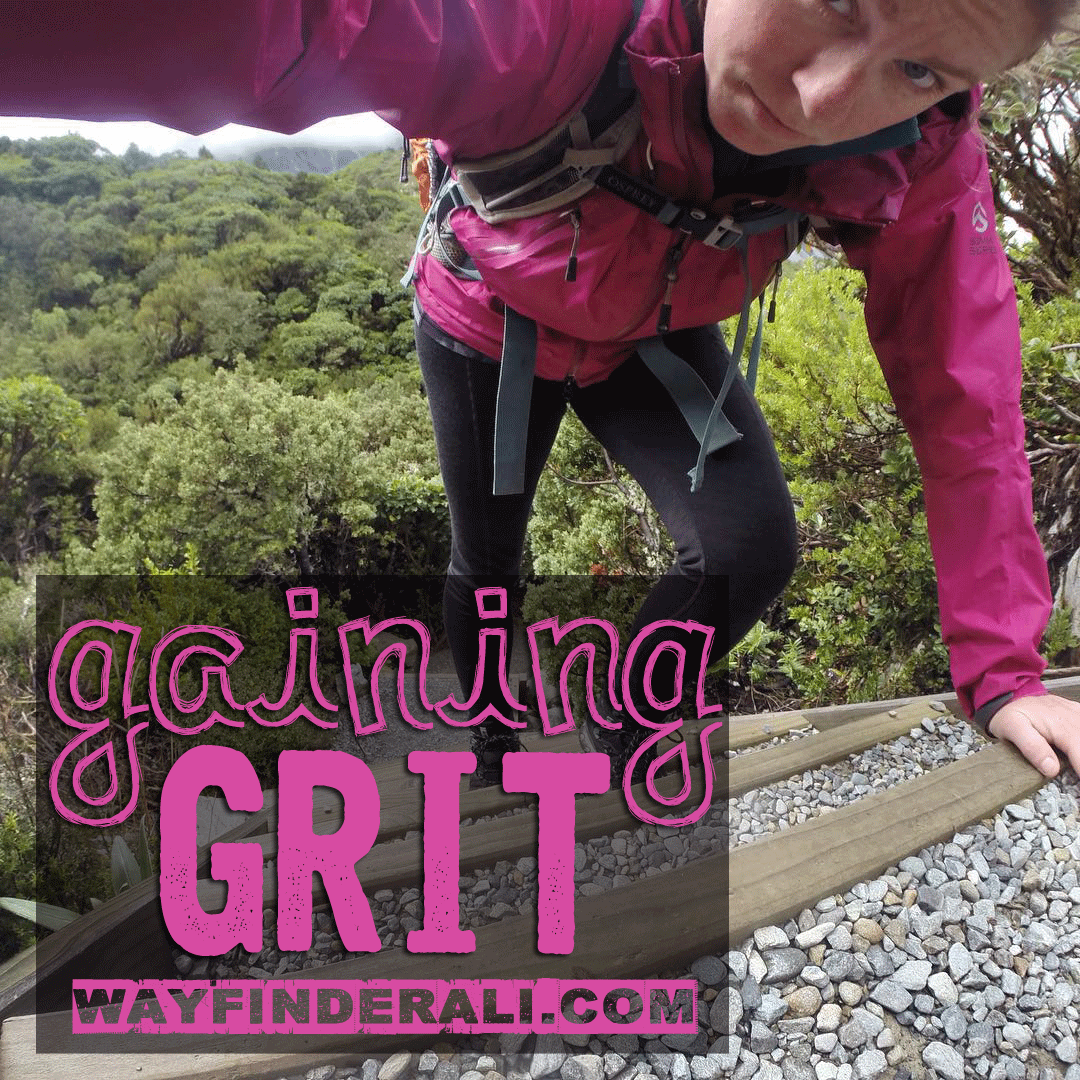
After hearing a recap of one of my particularly harrowing adventures, people often react with: "I don't know how you do it." For some reason, many people think that I'm fearless or super fit or something to be doing the things I do. But here's the thing,
I am not remarkable.
Let me tell you, I still cry on really tall exposed rock climbs. I huff and puff and get all red faced while hiking. I hate being cold. The difference between them and me is just a practiced mindset. Many people call this mindset 'grit.' 

Grit is mental fortitude and resiliency. With practice, it becomes an automatic emotional response that kicks in whenever you need it. 


Grit is like any muscle- the more you use it, the stronger it gets. Unlike a muscle, it is a bit trickier to activate.

I am an ordinary human who has been able to make my grit muscle strong. Everyone has grit, you've just got to find yours and strengthen it.

Keep reading to learn what grit can do for you, and how to get it


First days in New Zealand


I was so lucky on my journey from Raleigh to New Zealand. A delay in my original itinerary made it necessary to change flights completely. I ended up taking two flights to Hawaii instead of three, and avoided the dreaded LAX airport.

I had a whole row to myself on the flight to Auckland and slept most of the 9-hour flight.
Those nine hours of sleep were crucial to prepare me for the jam-packed day that awaited me after my 7am arrival. Because I stayed awake until that leg of the journey and got such good sleep on that flight, I didn't experience much jet lag at all. We had a long scenic drive along the Northern Coast, a short hike to see Cathedral Cove, and then more driving through mountains to our ending point in Raglan. 

American citizens are very lucky travelers,  especially in New Zealand. There is an expedited customs lane for US, Canadian, Aussie and UK citizens. Americans get a free 3-month tourist visa on arrival. 

Tony picked me up in our bright blue Subie hatchback rental and we hit the road. I've always wanted a bright blue Subaru hatchback, and at last, I have one, even if it's just for a little while. 

An Adventure at Paradise Beach


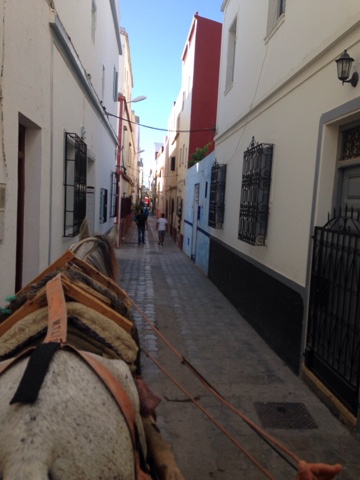
The cart hardly fit down the narrow streets
Chris and I decided to visit Paradise Beach- over 5 kilometers away from Asilah with beautiful scenery and surfboards to rent (supposedly). At the advice of a local, we haggled for a ride on a two-wheeled horse cart. With the price agreed upon, we hopped on Yaseen's cart pulled by his horse Carlos. Carlos protested work with tail flicks and pinned ears, but he knew every bump  and turn in the road. He didn't shy a single time at any of the big scary vehicles that buzzed, honked and roared past him from all directions.

We wound through the narrow streets of town, cantered on a two lane highway, crossed fields of crops and squeezed through a busy market on the way to the beach. The sunny ride was made even better by our chats with Yaseen in an awkward combination of broken Spanish, French, and English. He and I talked horses while Chris attempted to take a nap- a futile endeavor on the bumpy ride.

Menstrual Cups
A must for all adventurous ladies!

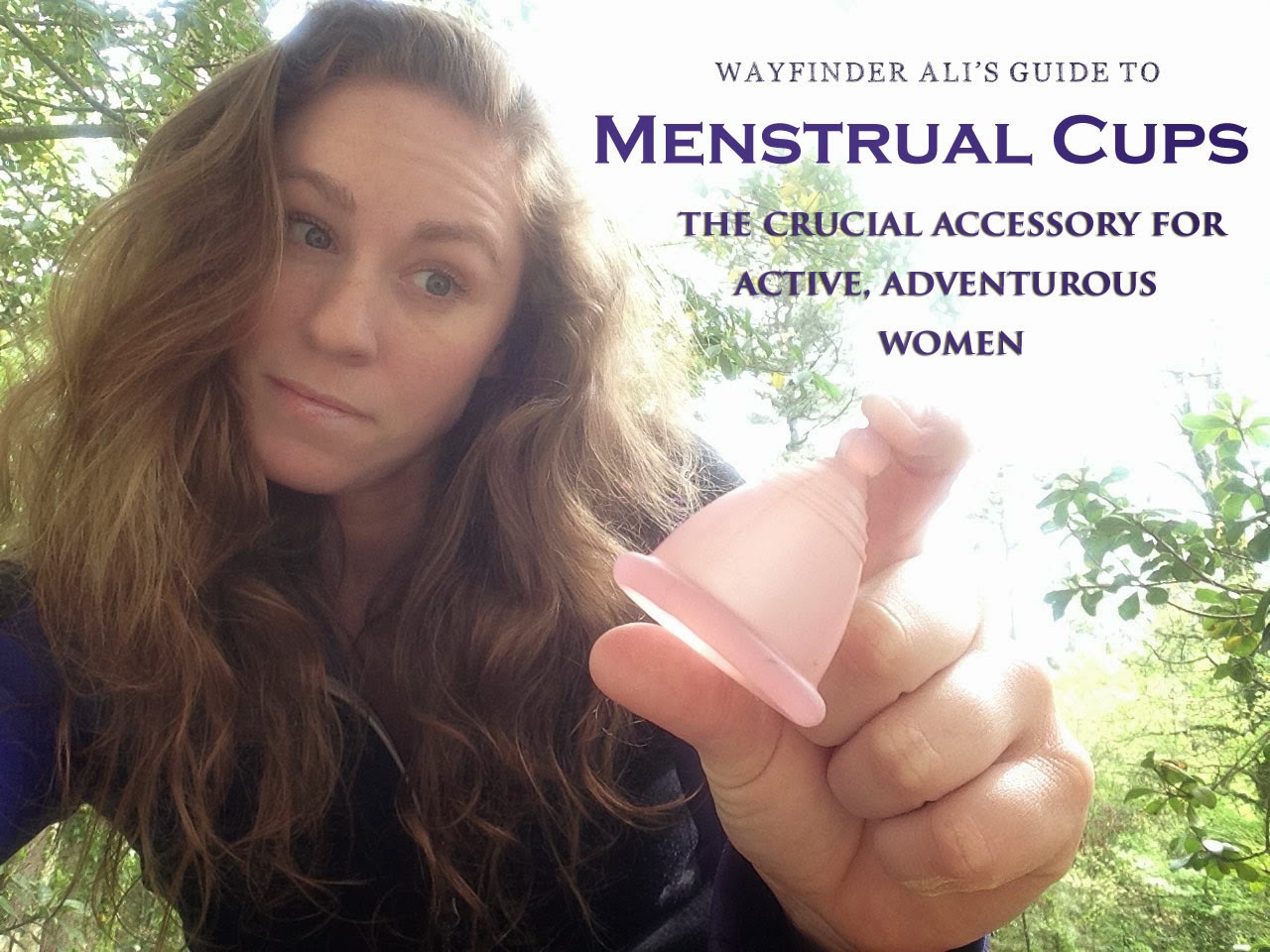
Pictured is a MeLuna Medium Mini (no longer available) with ball tip

I've been using menstrual cups for over ten years. They are the best feminine product ever, and I think every menstruating woman should own one.

A menstrual cup is a critical piece of gear for any adventurous woman, but more than that, menstrual cups are beneficial for all menstruating women and the environment.

I never go anywhere without mine, and it is such a relief to know that I just need this one item- no worrying about finding tampons in remote areas of foreign countries. No worries about find places to dispose of used products. This tiny cup is all I need.

Traveling Light: Ultimate Guide to Men's Travel Clothes

Tony doing some yoga in Yosemite wearing Prana Stretch Zion Shorts

Another pair of Prana Stretch Zion Shorts
The clothes you bring on your journey should be:
  • wrinkle resistant
  • stain resistant
  • fast drying
  • multi-functional (can you hike in your dinner pants?)
  • have large, secure pockets
  • comfortable


Why are these qualities important? 
When we travel, we don't know what we'll run into around the corner. Laundry facilities are rarely accessible, rain storms come out of nowhere, and there are always spontaneous adventures to partake in. 

You might spend a morning hiking and the afternoon sampling wine. You'll have more time to do both if you don't have to stop by your hotel room to change clothes. 

You'll be able to wash your clothes in your sink at night and they'll be dry by morning. 

You also want clothes, boxers, and socks whose smell won't induce vomiting after wearing them for two or three days. 

Raid your Closet
Before you buy anything, its time to go through your closet.You probably already have several pieces in there that would be great for travel.

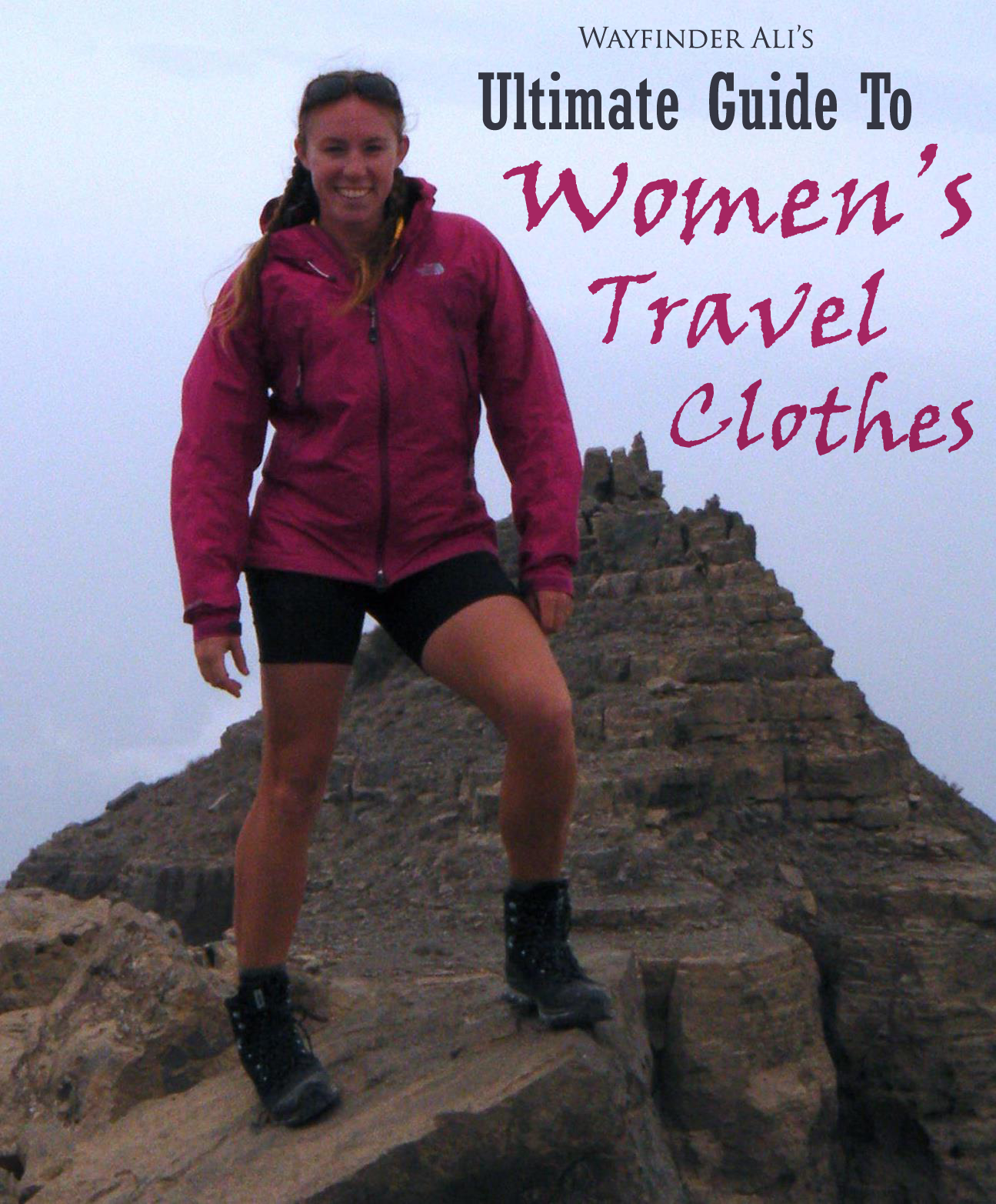
Traveling Light: Ultimate Guide to Awesome Women's Travel Clothes

ultimate women travel clothes
The North Face Gore-Tex Packlite Jacket and Lululemon shorts
The key to successful travel clothes is making sure that what you are wearing is not only comfortable and functional, but also reflects your personal style. The tips and suggestions here will help you use clothes you already own into travel clothes, turn stylish finds into multi-functional pieces and buy new items to fit your needs.

The clothes you bring on your journey should be:
  • wrinkle resistant
  • stain resistant
  • fast drying
  • multi-functional
  • have secure pockets
  • be comfortable

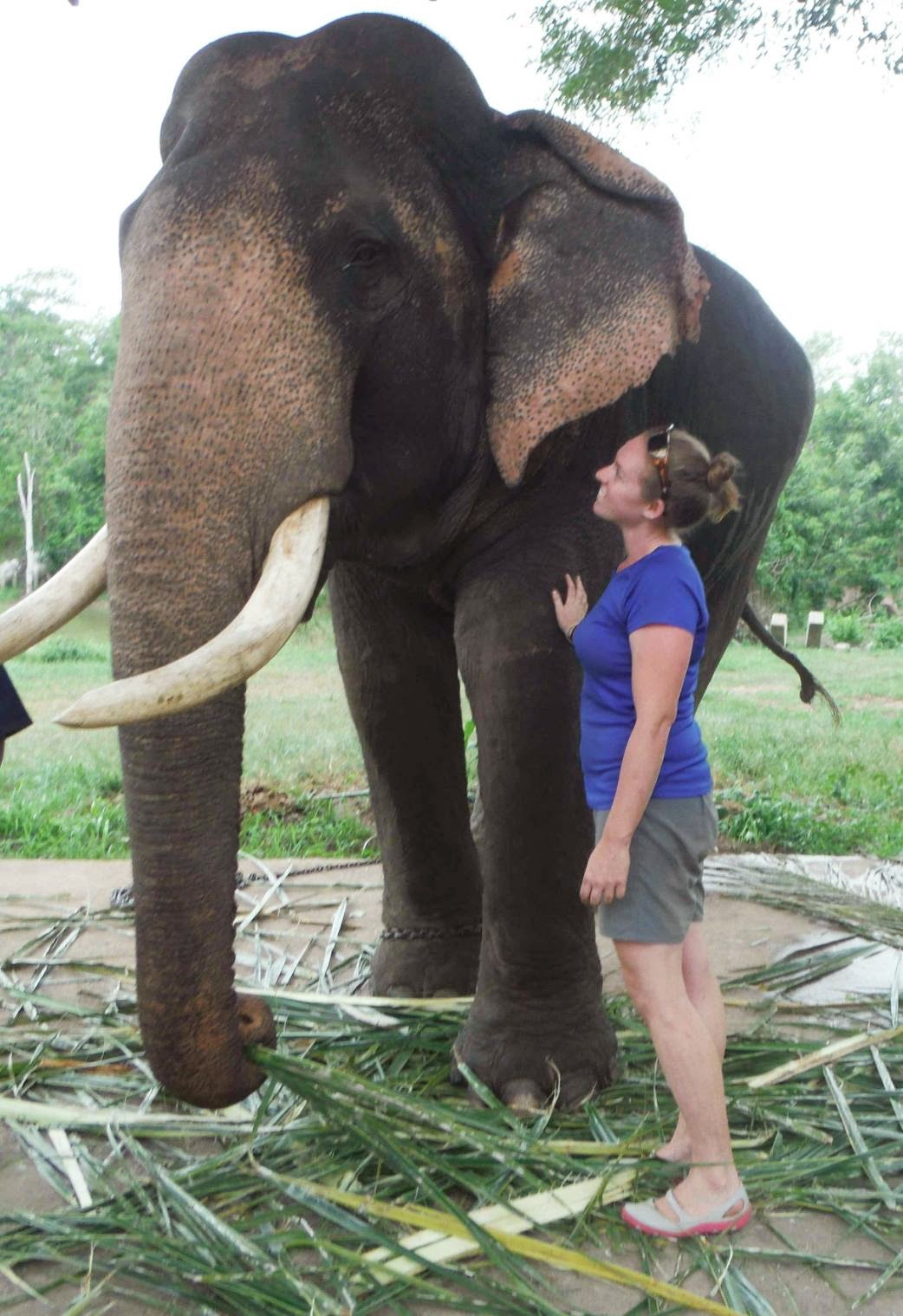
Wayfinder Ali with bull elephant in Thailand
At an elephant sanctuary in Thailand, wearing 
Patagonia Quandry Shorts and a C9 top from Target


Why are these qualities important? 
Adventure is full of the unexpected. Laundry facilities are rarely accessible, rain storms come out of nowhere, and there are always spontaneous adventures to partake in. 

You might spend a morning hiking and the afternoon sampling wine. You'll have more time to do both if you don't have to stop by your hotel room to change clothes. 

You'll be able to wash your clothes in your sink at night and they'll be dry by morning. 

You also want clothes, underwear and socks that won't start to stink after wearing them for more than a day or two.

Raid Your Closet
Before you buy anything, its time to go through your closet.You probably already have several pieces in there that would be great for travel. Here is what to look for:


How To: Pro-deals on Outdoor Gear

Outdoor gear is expensive, and if you're like me, you're hard on your clothing and equipment. I take great care of my gear and use it until it is absolutely dead. Seriously, my favorite top from Patagonia (the R1 Pullover) is still kicking after six years, but I'm wearing it around with holes in the elbows. My friends are probably embarrassed to hang out with me in public.
The holes have gotten worse since this photo was taken, I will probably patch them.....
While I take great care of my gear, and sometimes spend hours repairing it, sometimes its just time to let go. Zippers corrode, crotches rip, straps break. The worst part is replacing it. If that item is even still available, it is probably expensive. I suppose the term expensive is relative, but $200 to me is a lot of money. That top in the photo retails at $120. Ouch. My trail sneakers are around $100. Everything adds up so quickly. I've decided to create a guide to getting pro-deals. Keep reading to learn how.

Big Waves, Big Fun

Last night we had powerful winds here in Dibba, which made the sea extremely rough. Late in the night and this morning, the waves were around two meters- a rare wave height here. We spent the morning daydreaming of surfboards. Jen and Matt took advantage of the waves and took out the company body boards and went out at lunch. By afternoon, the surf had calmed down a bit - was between two and five feet. We decided it was a good afternoon to do some rough water kayak training. Griz, Meg, David,  and Nick came out to do some training, and Matt and Matty came out to have fun. I prepped Griz, Meg, David and Nick for their launch- describing what they would encounter paddling into such large waves, and how to paddle through them. Griz and I were side by side blasting through the waves. Each wave we encountered threatened to flip us over, and pushed us towards the shore. It really takes perseverance and power to muscle through big breaking waves. At one point we faced a monster wave, our only option was to dig in and shove ourselves into it. We blasted over the crest and caught huge air on the backside.

Paddling out was exciting and challenging. Everyone was laughing and smiling when we regrouped beyond the surf zone. Then it was time for some work. The team got some practice doing capsizes and rescues in the big seas- which really wasn't so bad thanks to the rolling swell. Nick let go of his kayak and got to experience the difficulty of swimming to a kayak that was floating away from him. It is definitely hard work, and nearly impossible to do in high winds. 
Nick! Your kayak is getting away!
Nick sprinting to get back to his kayak
We all took turns towing each other. I wanted them to feel what it was like to tow someone in large swell- the line jerks as the kayaks go over waves at different times- which is very unpleasant for the tower. We talked some about strategies for reducing risks while towing. I had hoped to do a few more advanced towing procedures but the waves were a bit high and the surf zone was too wide. Hopefully we'll have a few more days of choppy seas in the next month to do more training. 

Matt headed for ta wipeout
After their practical skills, it was time to practice landing. Landing in large surf is difficult and can be most dangerous part of sea kayaking. We discussed how the kayaks would react to the speed and angle of waves. It is very typical to experience your kayak turning sideways and then dumping you when surfing in. The more dangerous possibility is that your kayak will nose dive and go "end over end" launching you like a catapult toward land. After listening to these horrors, there were worried looks on a few faces. Just then Matt showed up in the short surfing kayak to show us how it was done, turning sideways and wiping out right at the end. He popped out of the foam smiling. Emboldened by Matt, they charged forward. Griz and Nick were the first to go- both of them got flipped by big crashing waves. Then it was time for me, and Meg and David in their tandem, to land. We all, of course, wiped out but had tons of fun charging down the face of the wave. 

Grizz catching an epic wave
 The thrill of catching a wave is worth the bumps and bruises from the wipeout. Our training session turned into a massive surfing session- we paddled out over and over to catch more waves. We all cheered when someone caught a massive wave and wiped out. We even drew a crowd- a bunch of locals and western expats were camping on the beach, and came to watch us surf. I even managed to catch a wave backwards in the little surf boat, and rode it backwards all the way to the sand.

PADDLE!!!!!!

Success!


Hidden Oasis Trek in Ras al Khaimah


A few days ago, all the staff from Absolute Adventure headed out to Ras al Khaimah with Ram to learn a trek that until now, only Ram knew. We drove to a wadi in Ras al Khaimah where there is lots of new construction. I have to say I was sad to see the new construction on the road. I went climbing in this wadi last year, and much of the really amazing rock climbing has either been blown up to make way for the road, covered by the earth used to build the road, or is completely unaccessible.  Some of the climbing still remains, though it is harder to get to. Thankfully, the wadis we trek through are so remote, they remain completely untouched by the new construction.

If you would like to go on this trek, you can head out with Absolute Adventure. 

The trek began with a pump up a steep rock ledge that ran along the wadi rim. We looked down as we hiked to see water flowing between the boulders in the wadi below us. The ledge slowly levels out and continues horizontally for a while before descending back toward earth, where it meets up with the top of the drainage that was once below us. 


Walking along the edge
We stepped off the ledge onto flat ground, surrounded by the ruins of a very small village. After passing through the village, we arrived a a large drainage filled with huge boulders.


The massive boulder field
Weaving around boulders, we found and followed an ancient path, small stone stairways hidden among the enormous rocks. We had fun jumping from rock to rock and finding different vantage points from atop the house-sized rocks. 
Tony climbing old steps up a massive boulder
Summiting the drainage rewarded us with a sudden view of green; an oasis of palm trees, tucked between the cliffs. 


The oasis high in the mountains
Beyond the oasis we entered another dramatic canyon with vertical walls. It rained recently, so there were dark streaks where little remnants of streams flowed down the rock walls. 


A dramatic canyon


Deeper into the canyon, we scampered up rocky staircases and ladders formed by dry waterfalls. 
Walking up dry waterfalls
Climbing up waterfalls
Stepping out of the canyon, we walked on steeply sloped mountainsides, headed to the highest point of our trek. At the summit of the mountain, we could see all the way to the sea. 

It was at the top of this mountain where we came to Musaibat village. Musaibat village is a small, and extremely remote village surrounded by towering peaks. There are several Pakinstani men who live in the village and care for the goats that belong to the families who own the village. These men live in extremely rustic houses without running water or electricity. They were very welcoming to us- it seemed they were excited to have company. Ram, who is from Nepal, speaks fluent Hindi and Urdu in addition to his own language, which made it easy for us to communicate with the goat herders. They invited all fifteen of us in for tea, which they made by boiling water over an outdoor fire. 


The two goat herders boiling water over a fire
An inside view of the small house

Waiting for tea
Ram pours us tea
The tea they make is very sweet. I think they make it with Lipton Yellow Label, goats milk and tons of sugar. We were thankful for their generous hospitality, so we compiled a bag of goodies from the contents of our packs to return the favor. 

We thanked them warmly and headed out. As we began our descent, I looked up to see one of the men taking our photo with his cell phone. We all got a kick out of it, smiling and waving for the camera. I was happy that they were as curious about us as we were about them. 


The trail along the mountainside soon transformed into another lofty stone ledge that hugged the side of the mountain. 
That's me pausing along the ledge for a photo
Goofing off on the ledge
Our views change as the ledge snakes around the mountainsides- we see the valley below, sheer rock faces around us, and the sea in the distance- a brilliant magenta mirror reflecting the setting sun.

Traversing the mountainsides, look how tiny we are compared to the mountain

The ledge fades into the side of the mountain, becoming a rough, rocky trail. As we descended down a slope we passed a tiny but lush date farm surrounded by a high metal fence. We stopped to rest next to a remarkable sight- two small rock pools filled with freshwater, ferns and mosses thriving around them. Ram explained that this is a natural spring that flows all year. The locals have built these small rock walls to form pools to collect the water. 
The tiny date farm on the slope
One of the pools, magical in the setting sunlight
We reached another drainage filled with boulders, and began rock hopping in the twilight. By the time we got back to the cars, night had begun.